
Today, we will look in more detail into convergence of Markov chains – what does it actually mean and how can we tell, given the transition matrix of a Markov chain on a finite state space, whether it actually converges. So suppose that we are given a Markov chain on a finite state space, with…More
Merkle trees

Suppose you are given a long file and wanted to use hashing to verify the integrity of the file. How would you do this in the most efficient way? Of course, the first thing that might come to your mind is to simply take a hash of the entire file. This is very easy, but…More
Finite Markov chains
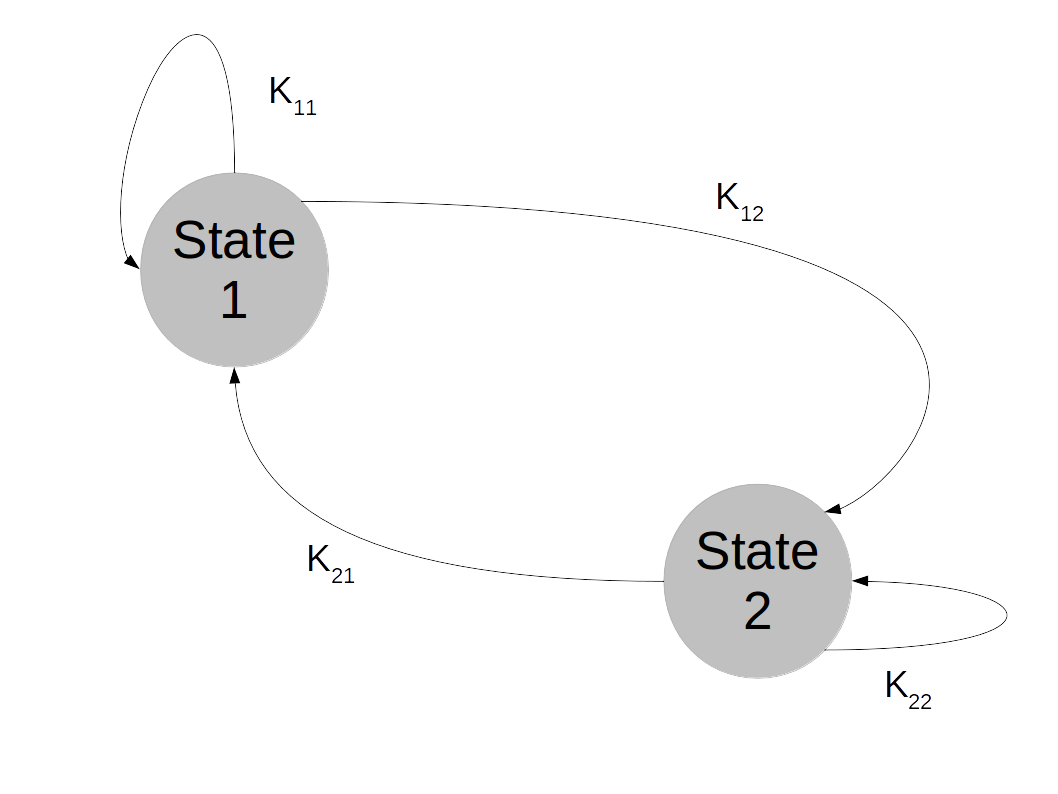
In this post, we will look in more detail into an important class of Markov chains – Markov chains on finite state spaces. Many of the subtleties that are present when studying Markov chains in general state spaces do not appear in the finite case, while most of the key ideas and features of Markov…More
Understanding bitcoin blocks

In order to analyse a block, obviously the first thing that we need is – a block. Fortunately, this is not difficult. We can either use the block explorer hosted by blockchain.info to get the second block in the blockchain in raw or JSON or use curl to retrieve the block from the command line,…More
Quantum computing and the Blockchain

Browsing the MIT Technology Review, I recently found an article on the potential threat that quantum computing means for the bitcoin protocol in its current form. This article is in fact a review of a paper that appeared last October on the arxiv preprint server. If you use your favorite search engine and search for…More
Monte Carlo methods and Markov chains – an introduction

In our short series on machine learning, we have already applied sampling methods several times. We have used and implemented Gibbs sampling, and so far we have simply accepted that the approach works. Time to look at this in a bit more detail in order to understand why it works and what the limitations of…More
Bitcoin mining – an overview

In my recent posts in this series, I have walked you in detail through two of the basic objects that make up the bitcoin blockchain – participants, represented by public / private key pairs, and transactions. Time to look at the third major ingredient – blocks. What are blocks and why are they necessary? When…More
Training a restricted Boltzmann machine on a GPU with TensorFlow
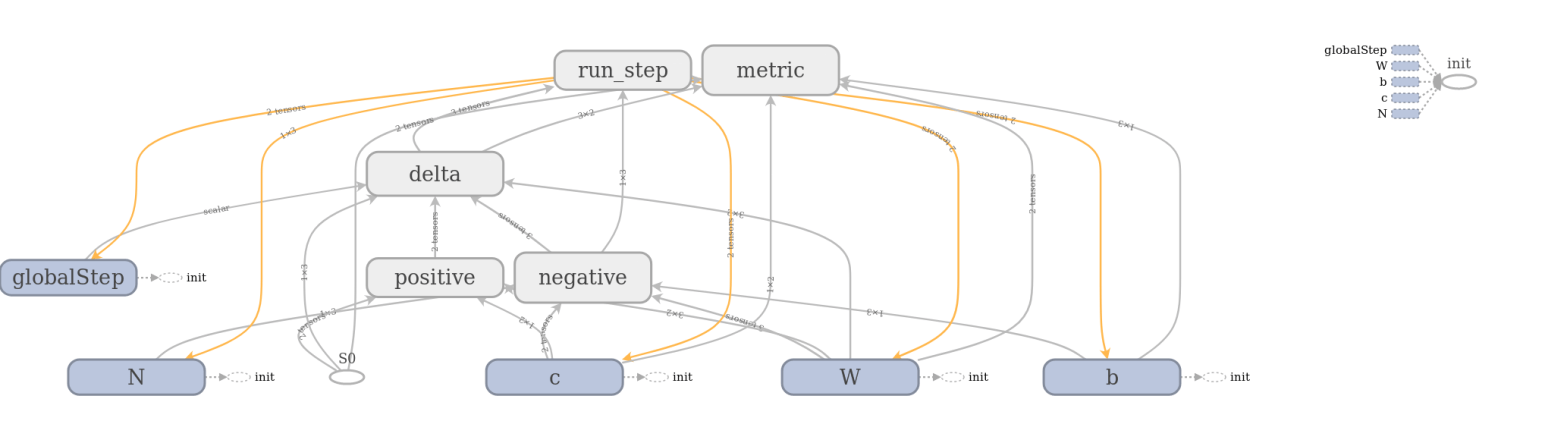
During the second half of the last decade, researchers have started to exploit the impressive capabilities of graphical processing units (GPUs) to speed up the execution of various machine learning algorithms (see for instance [1] and [2] and the references therein). Compared to a standard CPU, modern GPUs offer a breathtaking degree of parallelization –…More
Creating and signing a bitcoin transaction from scratch

In the one of the the last posts in this series, we have been able to successfully verify an existing bitcoin transaction. With the understanding of how this works, we should now be able to conversely create a transaction from scratch, sign it and publish it in the bitcoin network. Given an amount that we…More
Training restricted Boltzmann machines with persistent contrastive divergence
In the last post, we have looked at the contrastive divergence algorithm to train a restricted Boltzmann machine. Even though this algorithm continues to be very popular, it is by far not the only available algorithm. In this post, we will look at a different algorithm known as persistent contrastive divergence and apply it to…More
 LeftAsExercise