
We have now seen how quantum gates implement unitary transformations on qubits. Intuitively, we should, as in the classical case, now be able to combine these quantum gates into quantum algorithms that perform more complex sequences of manipulations of a quantum state. In this post, we will look at a first example to get an…More
Why building an operating system from scratch?

What happens if you turn on a PC? How is an operating system able to run multiple tasks in parallel? What happens if you hit a key on your keyboard? And what actually is a process? If you have ever thought for more than a second about one of these things, then read on… A…More
Quantum gates

So far, we have looked at states of a quantum computer and expressed these states in terms of qubits. However, just having a static state is of very limited use – to perform actual computations, we of course have to change our state over time. In quantum mechanics, state changes are described by unitary transformations…More
Qubits and Hilbert spaces

When you use your favorite search engine to search for information on quantum computing, the first term that will most likely jump at you is the qubit. In this post, I will try to explain what this is and how it is related to the usual framework of quantum mechanics. Please be aware that this…More
Networking basics – the TCP protocol

In our discussion of the IP protocol, the reader might have noticed that there are many desirable features that the IP protocol does not have. Suppose for instance that we are building an application that needs to transmit data in a stream oriented way – this could be a video, an MP3 file or a…More
Quantum computing

When I started this blog, my intention was to document my own attempts to learn and understand some of the topics at the intersection of computer science, physics and mathematics that have the potential to change the world in which we work and live. After spending some time with one of these topics – machine…More
Networking basics – IP routing and the ARP protocol

In the last post in this series, we have covered the basics of the IP protocol – the layout of a network message and the process of fragmentation. However, there is one point which we have not yet discussed. Assume that an application or operating system has actually assembled a message and applied fragmentation so…More
Networking basics – IP
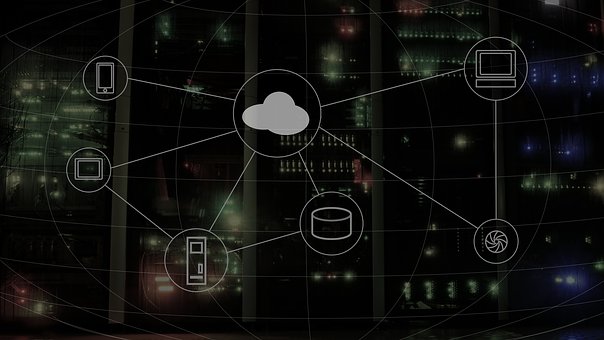
In the previous post in my networking series, we have looked in detail at the Ethernet protocol. We now understand how two machines can communicate via Ethernet frames. We have also seen that an Ethernet frame consists of an Ethernet header and some payload which can be used to transmit data using higher level protocols.…More
Networking basics – Ethernet

In the previous post in this series, we have looked at the layered architecture of a typical network stack. In this post, we will dive into the lowest layer of a typical TCP/IP implementation – the Ethernet protocol. The term Ethernet originally refers to a set of standards initially developed in the seventies by Xerox…More
Networking basics – the layered networking model
Recently, I picked up an old project of mine – implementing a Unix like operating kernel from scratch. I will post more on this later, but one of the first things I stumbled across when browsing my old code and my old documentation was the networking stack. I used this as an opportunity to refresh…More
 LeftAsExercise